Saturday, May 31, 2008

District 5110 Conference - Eugene, Oregon

By Emily Francona

May 29-31 - The annual District 5110 Conference was held in Eugene at the Hilton Hotel. Our team met up with our counterpart team from District 4790.

Team leaders Osvaldo (4790) and Emily (5110)


Osvaldo begins the Argentine portion of the two-team presentation

The two teams after the presentation

District 5110 team member Heather with District 4790 team leader Osvaldo in the "Rotary Idol" talent show


Tuesday, May 27, 2008

Back Home

May 27 - The team arrived home in Oregon.

Next team activity will be at the District 5110 conference, May 30-31 at the Eugene Hilton.

Watch for an article about this blog in the July issue of The Rotarian magazine.

Thanks to all our supporters and sponsors for this wonderful opportunity.

Lisa Cortes
Heather Navarette-Linnemayer
Kelly Talbert
Melissa Weinblatt


Monday, May 26, 2008

Adios, Argentina


Formosa-Corrientes-Buenos Aires-Washington-Denver-EugeneListen while you read (press the play button) -


May 26 - The team has begun the 8,000 mile trip back home - they are scheduled to arrive in Eugene on Tuesday afternoon.


The team - and its counterpart inbound team from Argentina - will make a presentation at the District 5110 Conference in Eugene on Friday, May 30 at 4:00pm in the Composers II Room of the Hilton Hotel.

The team will also be available in the House of Sharing throughout the conference.

Sunday, May 25, 2008

Formosa - Eme y Ene Instituto de Reproduccion Animal

by Melissa Weinblatt

My final vocational visit here in Formosa was one of the best! I was able to get to know Carlos and Javier, father and son veterinarians and owners of Eme Y Ene Instituto de Reproduccion Animal.

Click image for larger viewIn true Argentine fashion, I was originally told that we were just going to the campo for a few hours - well, after a tour of the facility, an asado (made especially for me I might add), a few glasses of wine and much discussion regarding industry politics and economics, etc.– I finally made it back to my host family’s house just as Emily was preparing to send a search party – SEVEN HOURS LATER! This is certainly a reflection of the culture as time is just a variable. And, of course, we don’t have cell phones to communicate with one another, so I was truly at the mercy of my vocational hosts.

We, as a team, have slowly learned to adapt to this over time, however I don’t think that this is something that I could ever fully embrace. I can probably count on one hand how many times during this exchange I was actually picked up for an activity within fifteen minutes of the designated time. Many, many times we waited and waited, sometimes thirty, forty or even close to an hour to be retrieved. At home, if I am running behind even ten minutes, I try to call and let the person expecting my arrival know that I am at least on my way, etc. This, however, is not part of the culture here. I am not saying this to be critical, it is just an observation.

Okay - so some interesting vocational information:

A peon, fieldworker or ranch hand, in the Formosa area receives the following monthly benefits according to my sources. Keep in mind that this is variable depending upon the enterprise, just as it is in our country:
• Approximately US$500
• Housing and food (family included)

The following are paid by the employer to the government and then paid to the employee:
• Insurance (an additional US$16 per child per month on top of the base rate)
• US$10 educational credit per child per month (to be used for transportation to school. Families in the campo are often far from any form of public transportation and are therefore subsidized.)

This establishment raises a variety of breeds, but specializes in Bradford and Brangus due to high demand from clients in this area. This was a VERY progressive operation and featured, by far, the NICEST cattle that I have seen in Argentina. It was like going to the State Fair. Almost all of the cattle were clipped and fitted as if they were to be shown the next day.

They work very closely with a number of enterprises in the United States and Canada. It was very easy to find things to talk about and truly felt like a vocational exchange rather than a show and tell. A truly interesting and satisfying culmination of my vocational exchanges here in Argentina.

Formosa - Orthodontists (and host family)

by Heather Navarette-Linnemeyer

I feel so fortunate to have such a fabulous family to stay with in Formosa - the Mora family is amazing. Nestor and Celina are both dentists - orthodontists - and have a private clinic where they do amazing things with people's teeth.

Click image for larger viewI had the opportunity to have a private class in porcelain implants with titanium screws. They have a photo journal (left - click on image for larger view) showing the many steps in the process of pulling teeth and recreating a perfect bite with implants. It has a huge effect on the pressure distribution in the mouth and entire head.

I specialize in working on the cranial bones in which they implant the screws, so it was very interesting for me to see that side of dental care and know how to better help my clients that have had such implants.

It is incredible to see their finished product, a beautiful smile. They have the best technology in computers and x-ray equipment, better than my own dentist back home.

I would definitely feel comfortable with them working on my teeth anytime. They are are very professional and put a lot of attention to diagnosis and care in their techniques.

Formosa Osteopath/Homeopath Visit

by Heather Navarette-Linnemeyer


I had the great opportunity to work with an amazing osteopath - Dr. Zanìn, otherwise known as Tito. Tito is a very talented homeopath that works with single remedies as well as acupunture and cellar regeneration therapy.

Tito has imported a bed that has jade rocks that heat up and roll up and down your spine stretching the vertebrae as you lie there and relax. He then takes you to another table to adjust your spine while he questions you about your history to help find the best homeopathic remedy for your constitution. I felt like we were old friends with a lot in common and have a lot to learn from eachother.

He told me that the medical regulations here in Argentina are much more relaxed than in the States - he can do injections of cellular therapy without any risk to his license or malpractice insurance whereas in the States there are different regulations that do not permit doctors the same liberties.

I had a treatment by him and felt very comfortable and would love to come back and spend more time studing with this doctor. He has a wealth of information to share.

Saturday, May 24, 2008

Formosa - Universidad Nacional

by Kelly Talbert

Yesterday I had my last vocational visit in Argentina. I met with the rector of the University of Formosa, and Ofelia, the academic secretary. Just to clarify, her role is an executive administrative position - I find it's a bit misleading when translated.

Rotarian Dorita, me, University Rector, Academic Secretary Ofelia


With each visit I've had here, my perspective on higher education in Argentina has grown more complicated, nuanced, and I must say, less positive than when I arrived. My conversation with the rector focused on the steps they are taking to increase retention at the university. He informed me that out of a class of 3000 first year students, only 1800 remained at the end of the year. By the end of four years, only between 20 to 30 percent will have successfully completed a degree program.

My previous articles have mentioned the vocational orientation efforts at secondary and post-secondary institutions I have visited during this trip. The rector echoed this need, and added that they would really benefit from some kind of information exchange with an institution that publishes recruitment materials. This is not so they can swipe a slogan, because slogans aren't necessary when your commodity is free. They could benefit from those who are used to articulating the benefits and requirements of certain programs.

Ironically, this information would be used for precisely the opposite outcome than what my university uses it for - the University of Oregon is hoping to DECREASE the number of incoming students, and increase the quality and persistence rates of those they do get.

Why? Because here:

- Admission is unrestricted, but that certainly doesn't mean that resources are limitless. They fight tooth and nail for classroom space, books, etc.

- Students who don't know what, let's say, an agronomic engineer does is more than likely to drop out when they become jaded. Even if they do want to persist but need help or tutoring, those kinds of resources are scarcely available. Or worse yet, they languish in a class and take up the seat of a student who really wants to be there.

- For better or worse, the idealistic notion that absolutely every young Argentine should or could graduate with a professional degree does not mesh with the real economic problems this country has, and it is not doing any favors for people who come from poor high schools and are not prepared for college-level work. It might be free, but until the investment in secondary education becomes more substantial, students are going to fail in college, drop out and become disenchanted. With little resources and self-esteem, they turn to crime, starting a family with no way to support it, and other counter-productive behaviors.

In response, the University of Formosa has formed a work group. This group consists of graduate students in the Psycho-pedagogical program (we don´t have this degree in the United States) who are doing entrance and exit evaluations of students - as well as other quantitative research - which will serve as their thesis project for licensure.

This research will hopefully inform their outreach efforts to secondary schools, as well as events they will put together, to inform the public about what they offer. The rector also said he hopes these efforts will begin to change a mentality that young people have here, in which they don't feel committed or responsible for things like attendance, study habits, etc. He wants to engender an idea that an education is an investment and something a student should be engaged in, not just a means to an end. I was so glad to hear this, and although everyone acknowledged that these issues won't be fixed overnight, this is a step in the right direction.

Interestingly, yesterday was also the National Day of the Educator in Argentina. As I stood on my host home's terrace in the morning, I could hear a protest of high school teachers happening a block away over the loudspeakers. They were demanding a living wage, a faculty bathroom, chalk, and to feel safe in school, among other requests. My host mom Cristina mentioned that many teachers have to move from school to school throughout the day, teaching a class here and a class there, because one school doesn't offer enough hours to make ends meet.

I don't know what high school teachers make, but in speaking with faculty from universities, I learned that a mid-career university professor makes about US$1500 per month. This is sufficient they're single, but the majority have families to support. So what happens? They become desperate and struggle for power positions in the department, because more power and status means a higher wage. Because the structure of universities here was imported from France, each department is really its own autonomous region, where they answer to no one and are allowed to manage things with their own agenda in mind - which may not involve serving the students.

That is the most frustrating thing to see. People are so dedicated to teaching - I heard people say many times, "I do it because I´m driven to teach, not because it earns me a living" - and it's a shame to see the higher-ups not efficiently or fairly distributing the funds so that campuses can benefit equally in every province. That's right, all the money for public institutions comes from Buenos Aires. Things are quite centralized in that way, and when you have corruption or self-interests involved at high levels, it can mean insufficient funds for far-off provinces like Formosa.

I could go on about some fascinating theories that some people have about why the government handles education in this way, and why it serves their agenda to lose their best and brightest scientists and researchers to other countries. There are fascinating conspiracy theories, but this isn't the place for those - besides, I've written a novel!

I'm certainly taking back a wealth of information, and I intend to stay in touch with some of these professionals in the interest of goodwill and sharing information.


From the District 4970 GSE Chair

Guaynas,

Emily with District 4790 GSE Chair Luis Sanchez-Negrette

It has been a tremendous pleasure to have you all around our district.

I do feel privileged I got the chance to organize your visit. Hope you liked it and got enriched both professionally and spiritually.

It has been a great time for every Rotarian who encountered the group. The reports I got were nothing but so gratifying. We all share the thought that your command of Spanish made the big difference. It allowed us all to know your hearts, how friendly and down-to-earth folks we can meet if we ever go to Oregon.

It has been an unforgettable time. And for sure the finest American group I can remember.

Great job Oregon! You sent the very best ambassadors of good-will!

Hope you all have the best of times when you return home. And do not forget Argentina is now your second place. Good luck in your lives.

Now that you have the degree of GUAYNAS , make it be respected and let men in Oregon know that you are no longer the same. Now you are even better!!

All my love and affection,
Luis Sanchez Negrette

Friday, May 23, 2008

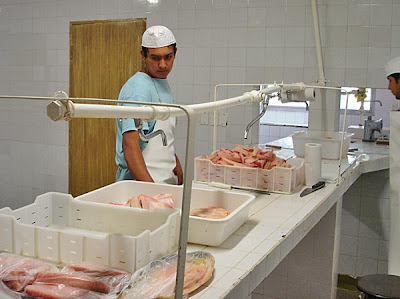
Clorinda Fish Farm and Processing Plant

by Melissa Weinblatt


May 22 - We toured a fish farm and processing plant in Clorinda, located on the Pilcomayo River across from Asuncion, Paraguay.


The facility raises Nile talapia in growing ponds on the banks of the Pilcomayo.


Formosa Municipal Planning

by Lisa Cortes

"To plan is the only guarantee to support the objectives and optimize the management of resources..."

Governor of Formosa


May 23 - Today I met with Ramiro Fernandez Patri, secretary of public investment for the Ministry of Planning, Investment, Projects, and Public Services of the Province of Formosa. We had a very interesting conversation about planning and Argentina's planning structure.


Ramiro gave me a copy of Argentina's Strategic Plan, the Province of Formosa Strategic Plan, and Formosa's City Plan!

This is the first time I have come across any strategic plans here. The reason for this is because unlike Oregon, Argentina does not require planning. The province of Formosa has chosen to put together plans because they feel it is important for efficient development and it improves their chances of having their projects financed by Nacional Argentina. I was pleased to hear this.

I left his office feeling good about the work I do for the Oregon Department of Transportation and the importance of it.


Formosa Rotary Clubs

by Emily Francona

May 21 - The team presentation was well-received at special meeting of the three Rotary clubs in Formosa:
- Rotary Club Formosa
- Rotary Club Formosa 9 de Julio
- Rotary Club 8 de Abril

Formosa Club President Nestor commented what a pleasure it was to receive a Spanish-speaking team (a comment heard from many club members and hosts during this trip).

These active clubs keep recent projects before the members on banners displayed during meetings, an excellent motivational tool.

The team enjoying a very professionally conducted Rotary meeting

Formosa Rotary Club Wheelchair Project

by Kelly Talbert


On May 21, we attended a ceremony in which Rotary donated adaptable wheelchairs to a school for children with reduced neurological-motor functions.


This is the sign that greeted us. It says, "Welcome. Thanks Rotary for lending us a hand and accompanying us on this endless path."


Workers, parents and Rotarians, led by PDG Luis Schattner, district matching grants chairman, with one of the new wheelchairs. This enhanced mobility extends the children´s access to all school facilities and outdoors.


Workers at the school


Wednesday, May 21, 2008

San Martin High Schools

by Kelly Talbert

BettinaThis is Bettina (photo left), the Rotarian who accompanied me to this public high school in San Martin.

Much to my surprise, I was asked to speak in front of a group of about 150 students! We were there at just the right time, as they were assembled to hear inspiring stories from students who are now out of school and making their way in the world, as well as sharing ideas.

I spoke a little about the beauty of free public education, and how important it is to make studies a priority in order to obtain the quality of life that we desire. I talked about my role at the University of Oregon, and mentioned that I'd met people at universities all over the area who are ready and willing to help them find their way.

Click image for larger viewThis (right) is the vocational orientation class at a private high school in San Martin. Classes are small and the teacher of the course is also the director of the school.

She mentioned that most schools in Argentina don't offer a course as part of their normal curriculum, and that this class is considered an elective. However, they are talking about making it a set part of the curriculum for juniors and seniors.

The students are playing a game in which a career is written on a sheet of paper on each person´s back. Working in partnerships, and without naming the career specifically, one explains to the other the career on his or her back, and the partner must deduce which career it is.

This is a small town, and many students tend to stick close to home. Therefore, the careers they chose were traditional and reflected the careers in their town (veterinarian, lawyer, accountant, etc.) The idea of the class is to learn how they're influenced by environment and family, and how they can discover career paths they'd never thought of before.

Just after our exciting television appearance today in Formosa, I noticed this Rotary symbol in a lovely green area across the street. Of course, I had to get a picture!

San Martin Roads

by Lisa Cortes

Click image for larger viewFamily on a moto


I met with Sergio Alberto Martin Sosa, the head system analyst for Provincial Zone 4 in San Martin in the Chaco Province. He is in charge of the roads in the province. This includes three levels of roads:

- primary roads, including provincial routes 90, 7, and 3

- dirt roads

- gravel roads

Of the 2,643 kilometers of roads, only 8 percent are paved! The other 92 percent are dirt and gravel. Route 7 is provincial route that connects the province to another important area called Saez Pena, but at this time it is not paved. It is scheduled to be paved this July by a private company. Argentina always pays the private sector to construct and pave roads, while Sergio's crew is in charge of maintenance and the construction of dirt roads.

Route 7 is 44 kilometers and will cost 172,000,000 pesos to pave. Paving this route is important to Argentina because it connects the Chaco province to Saez Pena, an area rich in soy. Now when it rains it is impossible for trucks to use. Also, the route is often used by trucks from Paraguay transporting goods to Chile.

There are no tolls on the route, nor will there be after it is constructed. This is because there is a mercado comun (common market) contract between Argentina, Brazil, Paraguay, Uruguay and Chile. The contract ensures that transportation is free between the countries. The second reason is that it allows students in Chaco to attend the university in Seaz Pena and will help stimulate tourism.

The province of Chaco buys machinery for the roads with a percentage of gas taxes. For each liter of gasoline, 12 percent goes to Nacional Argentina and they then give 4 percent to Chaco. The percentage is based on Chaco's population of one million.
Garrapatas in Argentina

by Melissa Weinblatt

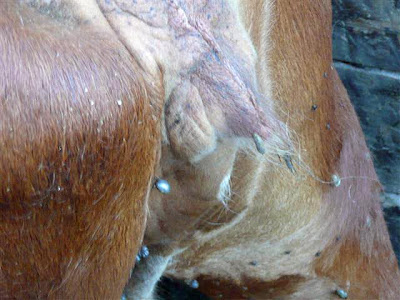
Garrapatas, or ticks, are a major problem for livestock producers here in Argentina.

Ticks

Ticks


I have visited numerous cattle operations in both Corrientes and Chaco, and will visit another here in Formosa on Friday. Regardless of the location, the cattle have been plagued by ticks - more ticks than I EVER wanted to see in a lifetime.

It is a serious issue, as products such as Ivermectins and Permectrins/Permethrins only serve as a temporary deterrant. The cattle are given actual baths in a Permectrin-based solution to kill the infestations. Treatment of this problem is very labor intenisve. The mass quantities of ticks are causing severe anemia in some cattle, thus drastically reducing overall production rates and even resulting in death.

These ticks are a special, subtropical strain - well, at least that is what I have been told! Regardless, they are MUCH bigger than any I have ever seen in Oregon. Even the more parasite resistant breeds such as Brahma cattle are severly affected.


The picture of the ticks in the palm of a rancher´s hand are small to average sized. I put my index finger next to them for size comparison.

Tuesday, May 20, 2008

The Tractor Runs Again!

by Melissa Weinblatt

Finally, the good news…the tractor runs again!

T444E engine - click for larger imageI had the pleasure of spending a day with Carina Mortola while in Bella Vista a week and a half ago. She and her husband Pablo run an impressive operation - cattle, rice, soybeans, etc. During my visit, Carina mentioned to me that they had a tractor with a T444E international diesel motor that was currently inoperable. This particular tractor is an integral part of rice harvest.

Apparently, they had isolated the problem to one specific part, however, it was virtually impossible to find. They had exhausted every resource in Argentina over the past two months and were preparing to travel to Brazil the next weekend to look for the part one last time before having to purchase a NEW tractor.

When we were done preparing to ship cattle that morning, Carina and I returned to her house for coffee and I offered to try to help. I went to the International Motors website, and sure enough, you can’t find a single dealer in Argentina! And, if you try to search for International Motors on google.ar, good luck!

So, I looked for dealers in Oregon and got really lucky - Brattain International Trucks of Eugene! My first phone call was difficult because the line had static and I was trying to translate an International parts manual from Spanish. However, thanks to modern technology, I was able to email Randy at Brattain a digital picture of the part. Within ten minutes I called him back and we started the process of gathering all of Carina’s information so we could ship the part that day! She was nearly in tears and couldn’t wait to call her husband!

It took a little over a week for the parts (we ordered extras) to arrive - I just got confirmation via email from Carina this afternoon that the tractor is running! Oh, and by the way, the parts were around US$45 each and expedited 2nd day air shipping was around US$100. So for about US$250, they have a tractor that works.

Monday, May 19, 2008

San Martin Rotary Club Project

by Emily Francona

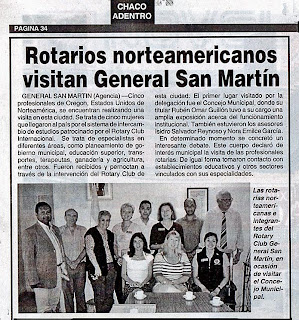
Local press coverage

Local paper coverage of the visit

May 19 - The Rotary Club of General San Martin in Chaco Province was founded in December of 2004, and currently has about 19 members, most of them busy young professionals.

The club makes these Carnival hats (modeled here by Lisa and Melissa) and sells them to raise money for their projects. They have an active project list and are currently seeking partner clubs for a safe water project for rural families.

The polluted Oro river, from which those without pumps draw their drinking water


A pump currently used by Toba tribe members, this one closer to the dwellings (others are much further away)

Emily sizes up the project for possible Port Orford Rotary Club project

The first phase of the project includes purchasing drilling equipment for wells, followed by the second phase, installing a fitration system. I told them about the Rotary Club of Florence (Oregon) water filtration project in Guatemala, and provided them the Florence club's project information.


Sunday, May 18, 2008

Resistencia Public Transportation

by Lisa Cortes

Click for larger image
I met with Luis Silvestri, the Secretary of Public Transportation in Resistencia. This department purchases buses and equipment, and plans and manages the bus routes.

The department has both local routes and intercity routes. They have seven bus lines that all go the main square in the center of town. A bus comes to the square every five minutes and it cost one peso (about 30 cents) for a ride, be it for two blocks or two miles.

Last year they had a ridership of 20 million, but they do not keep track of daily ridership. They estimate that ridership is 54,000 a day on the local buses, and 50,000 for the intercity buses.


Resistencia Hospital Visit

by Heather Navarette-Linnemeyer

a 'preemie' - click for larger image
I was invited by Dr. Anna to visit the hospital where she works as a radiologist in the cancer department. She was so much fun to sit next to at our Rotary meeting that I definitly wanted to spend some more time with her. She delivered me to the Kinesiology department where different therapists showed me a variety of techniques that they use, mostly lymph drainage and respiratory therapy.

I was then wisked away to the children's rehabilitation department where I was able to watch a therapist help a 12-year old with some stretches to help realign his scoliosis.

Then another therapist came to take me to their birthing department and explained that they have a very innovative program at this hospital where the premature babies are kept on their mothers until they are strong and healthy enought to be released home. The baby in the above photo was born two months early - the hospital provides food and accomodations for the mother to stay on location at the hospital where they can monitor the baby's food intake and growth development. When the baby hits a desirable weight it can be released home.

They have special gowns for the mothers to wear. They call it a kangaroo pouch - it is open to the mother's chest and has a special compartment that the baby sits in so it can be kept warm by the mother's body heat. They have done some studies to show that the cost is equivalent to paying for an incubator for the babies, and it is always better to have the babies in contact with their mothers if possible.

I loved this program and was so pleased to see this country offer this to their new mothers. There were three mothers per room - very tight quarters, but it is all free and they are doing a great job showing them how to breast feed and supplement formula when necessary. I really appreciate that medical care is free here.

Heather

Resistencia Osteopathic Practice

by Heather Navarette-Linnemeyer

Osteopath Gabriel
I had an awesome time with Gabriel, an osteopath with a private practice in Resistencia. He has the capacity to work with nine patients in four different rooms. Some patients he hooks up to magnets, others with heat lamps while they patiently await him to come and do some manual manipulation. He juggles quite a lot of people at the same time.

In the photo, he is treating a woman who was having severe neck pain. He showed me some of his techniques and then invited me to work on her as he observed and asked questions about my style of treatment. He was very enjoyable to work with - enthusiastic and open to new ideas. He works a lot with professional athletes, and has traveled to other countries with the rugby team as their personal therapist.

He invited me to come back and work in his clinic anytime I am in Argentina, and he is just the kind of person I love to work with - extremely capable and personable.

I worked with this woman for a while as he ran to other rooms treating patients, she got a lot of relief and was very grateful for our time with her. Gabriel then showed me how to adjust a left sacral torsion as well as the illium. He uses his body to help position the patient before he adjusts them. He definitly has to work fast with nine people waiting on the tables for him to come treat them. He has a separate room for three women at a time as well as a room just for men.

I had a lot of fun working with Gabriel - I hope I can come back some day to take him up on his offer.

District 4790 Annual Conference

by Emily Francona


May 16-18 - The conference took place at the local university auditorium, which at first appeared to be a small venue. Given the very low attendance we observed since the opening plenary session Friday evening through the last session of the day on Saturday, this venue was actually oversized.

Many Rotarians from the Corrientes area just across the Parana river chose not to attend because of continuing problems with the bridge: the provincial security forces keep closing it and only allow occasional transit to express their displeasure over low salaries. This is making life miserable for the locals on both sides of the river and may have contributed to the extra low attendance, even for their standards.

I asked several Rotarians about attendance trends, and most cited high cost (A$70 registration fee, meals A$100) and long travel distances as a deterrent.


Of the sessions I attended I found only two of interest: an informative overview of Rotary grants by district trainer Luis Schattner and a very moving presentation by the RI president's representative Allan Sellers about the importance of being a Rotarian. Saturday night's gala awards dinner at the Chaco Golf Club was fun, with standard banquet food and a live band. Once dining and awards concluded, most attendees danced up a storm, including the substantial PDG contingent.


Our presentation at the conference was well-received and we continue to hear comments from various Rotarians how much they enjoy a language-capable team. Our home hosts and club hosts are getting much more out of this exchange, as are we.

Friday, May 16, 2008

Resistencia - Universidad Nacional del Nordeste

by Kelly Talbert

Universidad Nacional del Nordeste
This morning, Rotarian Cielo Molina and I went to the Universidad Nacional del Nordeste, the comprehensive, major public university in the area. This university has a few branches, but the one in Resistencia is the largest. I was excited because in terms of size and course offerings of the schools I've visited, this institution is most like the University of Oregon.

Dr. Jorge V. PilarI first met with the Dean of the School of Engineering, Dr. Jorge V. Pilar (photo left). Argh, the one bachelor's degree we don't offer! I thought to myself - what on earth will I ask him? Luckily, our conversation had more to do with comparing our systems, and more importantly, how this department has worked to make sure all students start out on the right foot.

They've instituted a course for all first year students that starts before the formal school year. The six-week course covers algebra and other fundamentals the students will need to continue successfully, but it also covers themes like study skills, responsibility, the importance of attendance, what engineers do and what the rest of the major looks like. Jorge said that students come in with such varying levels of prepardness from secundaria (high school) and varying levels of clarity about what the think an engineer does, that it was necessary to create this comprehensive course to cover those bases.

At first the course was optional, and they commented that they could see a marked difference in the level of engagement in classroom discussions and overall comfort in maneuvering through the university system between those who'd taken the course and those who had not. This "pre-class" is now mandatory. So they're trying to orient them, like a mini academic refresher and IntroDUCKtion (UO´s summer orientation for new students) all in one.


Next, I met Professor Roxana Rojo (above), one of three people at the University in the Department of Vocational Orientation. While our college/career centers in high schools are a balance between discussing different careers and which college fits a student's personal and educational goals, this office is already within a university, so it focuses only on careers and outcomes. This effort hopefully lowers attrition rates, and helps them find their path faster.

They showed me the schedule with all the secondary schools they'd visit over a three month period. Sometimes they take a faculty member with them to the high school, to talk about a specific career. But more common are the panels that they put together on campus, featuring a variety of faculty. The invite students from all over the area to ask questions of the faculty. An interesting difference is that the don't really touch on th social or personal aspects of the campus, such as student life, advising, housing, etc. This is partly because they don't have some of these resources, and partly in part to a view of college as more of a means to an end rather than a comprehensive experience.

Roxana's main frustration was that, by the time she sees these students, they are conditioned to have certain expectations in terms of their opportunities or trajectory, based on commentary from teachers or financial limitations. She wishes this kind of orientation coud start earlier. They start meeting with the students in their last year of high school, so they don't have time to get to know them. They used to have small, intensive career exploration workshops in their department, where students would talk about family situations, perceived barriers to going to college, etc. However, they've lost their space and don´t have the room for that on a regular basis.

It was interesting to see how the university has stepped up and responded to the challenges of inadequate preparation, or a lack of college or career counseling in high school.

Wednesday, May 14, 2008

Centro Genetico de Litoral - Artificial Insemination

by Melissa Weinblatt


Yesterday we visited the Centro Genetico de Litoral just outside of Resistencia. After a long, dusty drive, we finally arrived at the operation´s headquarters. Heather and I rode together with Juan and Patricia (members of the Resistencia Rotary Club) in his Mercedes as Eduardo, Emily and Lisa followed our immense cloud of dust. Although it was truly a beautiful setting, I couldn't really give you directions due to the lack of road signs and over-abundance of dirt roads. Nevertheless, it was a great vocational experience.


We were greeted by Dr. Manuel Garcia Sola and his daughter, Jimena (Director of Administration), who gave us a very informative tour of the facility. They currently have twenty-six, very impressive, bulls on site for semen collection. The focus of this operation is heavily concentrated around subtropical bovine genetics.

They have worked diligently to create strong genetic lines featuring cattle that are well acclimated to high temperatures and demonstrate elevated levels of parasite and disease resistence. They have integrated proven bloodlines from Austrailia, Brazil and Africa into their program, slowly and methodically over time.

I was amazed as to how similar marketing strategies and facility operations were to those in the US. They had state of the art collection equiment, DNA analysis material and semen containment systems.

This is their premiere bull - Capellan. He won Grand Champion Bull 2005 in Palermo, Buenos Aires - the equivalent to our Cow Palace Grand Nationals, Denver Stock Show, etc.

After a wonderful tour, they treated us to cold beverages and empanadas in the shade!

Tuesday, May 13, 2008

Resistencia Universidad Tecnologica Nacional

by Kelly Talbert


Plaza 25 de Mayo - Resistencia

Plaza 25 de Mayo - Resistencia

Resistencia is the city of sculptures and murals, and it has a gorgeous central plaza. I am staying with Rosana Marchi, a lawyer and judge in the city. Judges and lawyers have early mornings here, as the courts open at 6:30am!


This morning I had a really great conversation at the Universidad Tecnologica Nacional. Maria Elena Ocaño, a Rotarian and English teacher, came to pick me up.


We met with Isabel Ramirez Cantero, Secretaria de Extension Universitaria. Isabel basically is the manager of all extension programs at the university, including many technical programs, an English degree (five year program!), and programs and training for both kids and adults.

I learned some interesting things at this visit, including:

- This university is public and free, and and I learned that there is a course that many high school seniors take, which consists only of language and math skills, and that´s the only thing they have to pass to get into this university. They can take a normal course over three months, or an intensive one in one month.

- Once they get to university, there;s a placement test, and a "filter" course to both point students toward a carrera (major) or gently wash them away if they aren't interested in the programs or willing to do the work

- Tutors offer office hours for students, and professors do too, to a lesser extent -The teacher student relationship has improved over the years, and is more collaborative than it used to be (in this institution, at least).

- Only 25 to 30 percent of students actually complete their degree program. Students either get lost or lose interest, and because it´s free, there´s no big motivation to finish in a given time period.

I was encouraged that the university has made a few targeted efforts to do outreach to high school students. This is recruitment, of course, but with those efforts a student can also deduce what she doesn't want to do, which is sometimes just as important on the path to deciding a career.

Still, if the ultimate goal is to graduate young professionals, the system in Argentina isn't working too well. The persistence rates I mentioned are seen all over the country.

Even though Argentina has fantastic universities with high academic quality, persistence rate is low. I think this isn't as severe a problem in the U.S. because families do a lot of research before going to college, since it's such a huge financial investment.

Both Maria Elena and Isabel noted that Argentines may not realize or value how unique it is to have free higher education. This was a really enlightening visit.

Riding in the Campo

by Melissa Weinblatt


While Emily was making a visit to a club project, the Resistencia Sur club arranged a visit to the campo para las guainas to ride horses with the gauchos.

Melissa with the dueño del campo

Melissa with cattle


Lisa

Gauchos


Resistencia Sur Rotary Club

by Emily Francona

Emily with club president Silvio

May 12 - This is our host club for the week, with past team leader Eduardo as our coordinator. He and his wife Cielo hosted us upon arrival at their beautiful home with a small reception (great empanadas and nice wine), with many club members in attendance.

It is becoming very evident how much logistic effort is required to haul us and our gynormous suitcases around from place to place, but they all welcome us warmly and seem to take it all in stride.

Click image for larger viewThe club's regular meeting was preceded by an opportunity to observe tango classes open to the public at their meeting place and we had a chance to try it out....

This club has 29 members and also features an MC who presides over the program. Once again our presentations were well received, followed by a number of questions to the team. This generated a discussion about the differences between our university systems, ably discussed and explained by Kelly.

At the end of the program the MC, a founding member of the club, commented pointedly that this is the first time in many years that they have actually enjoyed receiving a GSE team, because this time there was no real language barrier and every member of the club and host family was able to become a real part of the exchange. We heard similar comments from other Rotarians during the past two weeks.


The club took me to visit one of their community service projects - a literacy project for senioir citizens (photo).


Bella Vista Overview

by Lisa Cortes

Bella Vista really stood up to its name. The city was as beautiful as the people who make this friendly everybody know everybody place. I instantly liked the semi tropical city. It is located on the river with a spectacular view.

Melissa and I stayed together at the home of the Basigalups - Japo and Vanni and their three wonderful children and dog Simon (a very friendly dog until you get near his hueso de cordero - lamb bone). Japo is like a character from a movie, busting with energy, and expressions that you cannot help but smile about. Of course, Melissa and I took full advantage of his personality by arguing with him about how many acres are in a hectare and by hiding his lemon pie. We laughed until our stomachs hurt. His entire family was playful and inviting. We had a great time and felt part of the family and were sad to leave.

We went bike riding with his daughter and her friends around the town. We had a blast even though my chain kept falling off and we almost got rear-ended by a bus, oh, and Melissa almost hit a woman crossing the street.

As I mentioned, everybody knows everybody here. We wanted to walk to Roberto's house for lunch and were given the address from Nuni (our chauffeur for our stay) and she said if we got lost just ask anyone where he lived. We asked "en serio?" (are you serious?). She said of course, and it was true - everybody knew how to get to his house.

It was an amazing feeling, not to mention we were famous for a few days. We did a television interview and a live radio interview, too. In our bike riding adventure, trip to the beauty salon, and shopping we were asked if we were the girls from Oregon that they saw on TV. I think once we responded in Spanish with our Oregon accents it was hard to deny.

On Saturday after a great day trip to an island in search for monkeys we had all of the girls over for dinner at our host family´s house. We used the parilla (grill) to cook a lamb - yes that is me preparing asado. Melissa was supposed to help cook and I got the job of washing dishes since I told someone the day before that I did not like to cook. Of course, all we got to do was feel the meat to see if if was warm enough to flip. You know men and their barbeque.

Click image for larger viewOn the topic of meat, Emily gave me a towel with the various cuts of beef (right- click image for larger view). There was few cuts that I said I would not eat, but Alicia Negrette informed that I had in fact actually eaten some of them at her house and liked them! I will not say what it was. I was happy to know that Japo had eaten much worse! It was an amazing dinner with a wonderful conversation. We further debated how many acres in a hectare, compared the cost of cars, agricultural land, and many other products.


Emily and Lisa with City Councilor


On the vocational side, I met with the mayor, judge, and council. The council was generous enough to take time out of their day to speak with Emily and me. We discussed their structure and role in the city. I found it is much like that of Roseburg. I discussed what I do and how transportation decisions are made in our state. They do not have the same departments or positions we do.

I also confirmed that Oregon, as I had thought, is progressive and innovative with our transportation planning. The state has statutes and goals that require more coordination with local governments than here in choosing projects. There is not an emphasis on strategic plans at all levels as in our state. They were also interested in the discussing Obama and Clinton. It is surprising how many people here our interested in the subject.


My trip to Bella Vista was filled with a heart warming welcome, great conversation, energy, and laughter. Thanks again to the Basigalups and the Negrettes - this is District 4790 GSE Chair Luis's wife Alicia, Emily's wonderful hostess.


Bella Vista Schools

by Kelly Talbert

I had the opportunity to visit the secondary school (high school) where Alicia Sanchez Negrette teaches English classes. This was an interesting contrast with the super-motivated students the previous night at their Open Window school. I sat in the back and observed the class for the first part, then I introduced myself and we had Q & A in Spanish

I was surprised when the class ended and Alicia explained that they might have a "free hour" now. What does that mean? I asked. She told me it means that the next teacher may not come. Teachers don'tt earn great wages, to say the least, and sometimes they don't show up. "What happens in the U.S. if the teacher doesn't come?" she asked. I said, "That doesn't happen." A boy asked, "What if the teacher gets sick?" I explained that a system is in place so a substitute teacher would come. Then the next teacher DID come, so it all worked out.

Then Alicia and I went to the library and chatted with the librarian and other faculty, who drank mate and unwound a bit. It´s good to know that everyone has their version of the teacher´s lounge where they can go and decompress for awhile.

Many of the students at this secondary school won´t go to college. The class I met is about to graduate and the weight of the world is almost upon them. I recalled their smiling faces as I stood in front of the map of the world, showing them Oregon, and felt a wave of sadness. Free public universities are a start, but they don´t fix the economic realities of these kids. These kids have teachers who sometimes don't show up, they have no formal, consistent assistance in determining what career path to choose, if they even go to college. There is no guidance counselor, nor college fairs.

The librarian said that there was someone last year who offered "vocational orientation" on Saturdays, but they had left. And even for the most motivated students in that classroom, they'd have to leave home to go to university, and pay rent, food, electricity, etc. And that is not feasible for many of them. This visit and conversation was a helpful puzzle piece in understanding the big picture.

I then visited a terciario, yet another interesting piece of the puzzle. Terciarios are kind of like a community college, except their programs are three and four years long. They're a good alternative for kids who economically can't go off to college, because they overlap with some of the programs offered at university.

The students I spoke with were studying to be teachers (I noted with amusement that the classroom makeup looked similar to the classes I took in the Middle-Secondary Education program at the Univeresity of Oregon - all ladies, and one guy!).


Maria Eugenia (known more commonly as Mangu), and her daughter Paloma, my delightful hosts in Bella Vista. Mangu is married to Osvaldo, the current team leader for the GSE group visiting Oregon.


Heather and Emily observing a strawberry crop in Bella Vista. After a plague infected many citrus in the area, farmers have been diversifying, trying new crops like blueberries and raspberries.


Bella Vista Kinisiologia

by Heather Navarette-Linnemayer


I had a great opportunity to meet a kinesiologist (physical therapist) named Laura who allowed me to watch her work on a patient who was recovering from a knee injury.

Laura is highly trained in lymph drainage but also works a lot with magnets and electrostimulation. I enjoyed discussing the differences in our professions.

She is covered by the public medical insurance as well as state, but in some cases if the techniques that she is offering are outside the normal protocol she will charge an extra fee when the patient has the ability to pay.

She also does continuing education like we do in the states, so I gave her a copy of the Visceral Manipulation class that will be coming to Buenos Aires this fall. I was excited to see that she had a separate room with exercise equipment to help with rehabilitation. Her office was the most comfortable and the best equiped one I have been in yet. She has a good eye for interior decorating. Her assistant is also in the photo on my right.

Bella Vista Chiropractic Visit

by Heather Navarette-Linnemayer

Click for larger imageI had the honor of visiting a chiropractor in Bella Vista who had spent 14 years as a kinesiologist - otherwise known as a physical therapist.

My host mother Sylvia who is very interested in alternative methods of healing and has been trained in Reiki, asked if I could work on her herniated lumbar disk in front of him and explain my techniques so that he could learn about CranioSacral Therapy and Visceral Manipulation.

He was very receptive and she was great about describing what she felt in her body so he could get her perspective on the therapy. He also got on the internet and printed out a copy of the Visceral Manipulation class offered by the Barral Institute that will be offered in Buenos Aires later this year.

I was then able to take that copy with me to my next vocational exchange to spread the word of the great classes that we all have access to. I realize that these techniques are new to Argentina, and I am thrilled to have the opportunity to share a little bit about them with these highly trained professionals.

I have been extremely impressed to find out that the universities are free here, you can become a Chiropractor and never pay a dime of tuition. How awesome is that

Saturday, May 10, 2008

Visita de becarias del Rotary


Un grupo de rotarias del distrito 5110 del estado de Oregon, Estados Unidos, están visitando Bella Vista como parte del programa internacional GIE (Grupo de Intercambio de Estudios) del Rotary.

Megalatina se entrevistó en un almuerzo ofrecido por el matrimonio Guido con el grupo integrado por Emilia Francona y las becarias: Lisa Cortes; Heather Navarrete-Linnemeyer; Melisa Weinblatt y Kelly Talbert. El grupo femenino recorre el distrito argentino 4790 compuesto por Corrientes, Chaco y Formosa.

La líder del equipo, Emilia Francona, es miembro del Rotary Club de Port Orford, actualmente jubilada de la Fuerza Aérea de los E.E.U.U. y fue miembro del del Comité de Inteligencia del Senado norteamericano.

La misma en contacto con www.megalatinafm.com.ar comentó “La misión de nuestro intercambio de grupo de estudios es mejorar nuestros conocimientos y nuestra comprensión cultural a través del compañerismo y el intercambio de ideas con nuestros colegas argentinos. Avanzar la comprensión y la buena voluntad internacional al representar los ideales de los rotarios, de nuestro distrito y de nuestras profesiones.

"Estamos en Bella Vista durante cuatro días; el lugar es realmente hermoso, y de aquí viajaremos hasta Resistencia continuando nuestra visita a la Argentina”. Las becarias vienen de distintas profesiones tales como, en el caso de:

- Lisa Cortes, ella trabaja para el gobierno como planificadora de transporte

- Heather Navarrete-Linnemeyer es terapeuta sacraneal, ayuda a los pacientes a mejorar sus movimientos, principalmente el cerebro y la espina dorsal

- Melisa Weinblatt tiene interés en la industria agrícola y en la preparación de caballos jóvenes y en sus entrenamientos

- Kelly Talbert está dedicada a la idea de la educación universitaria y en la universidad de Oregon se encarga del plan de reclutamiento de nuevos estudiantes y de proveer información sobra la universidad.


Friday, May 9, 2008

Bella Vista Chiropractic Visit

by Heather Navarette-Linnemayer

I am staying with a wonderful family in Bella Vista - Roberto and Cecilia Guido. Cecilia has studied Reiki up to the Master level as well as a number of other alternative styles of healing. She and I are always talking about healing traditions and have worked on each other a number of times in the past two days.

Yesterday Cecilia took me to a chiropractor's office - his name is Rodolfo Rapacciolo Wirth. He has been a kinesiologist for years which is similar to a physical therapist with manual therapies and has recently finished his schooling in chiropractic. He is the only chiropractor in this city of 40,000 people. He was excited to learn some of my techniques and Cecilia asked if I could work on her and describe what I felt and what I was doing so he could get an idea of my work.

Cecilia told me that she has been diagnosed with a herniated disk in her lumbar spine and has some pain there, so I showed him some gentle easy techniques to release the fascia and the vertebrae in that area. I showed him some visceral manipulation techniques as well becuase I could feel that her pancreas and spleen were involved as part of the tension that was pulling her lumbar and thoracic vertebrae to the left side towards the organs.

Rodolfo was so interested he went online to Google visceral manipulation and found the Barral Institutes website and the classes that they offer in Buenas Aires the capital city in Argentina. He was kind enough to print off a copy for me to take with me and share with other practitioners. I felt so pleased with our exchange and he said that he is inspired by what I showed him and is interested in taking a course in it. It will really complement what he already has to offer. I am so greatful to stay with this family, everyone has gone out of their way to help me.

Roberto is an excellent pianist, he took me to his group rehersal last night, there are three guitar players, three accordian players and four singers as well as him on piano and organ. They play traditional tango and folkloric music, very beautiful and extremely professional. They perform about once a month and really enjoy singing togeather for fun on Fridays over a BBQ which they call Carne Asada.

I am learning so much here and feel greatful to be able to contribute. Today Cecilia is bringing a good friend of hers over so I can treat her for a rare condition that is affecting her health and primarily her head.

More on that later.... blessings,
Heather

Thursday, May 8, 2008

Open Window English Language Institute

By Lisa Cortes and Melissa Weinblatt

click image for larger view

Last night we had the time of our lives.

We were invited to Open Window, an English language institute run by Luis and Alicia Sanchez Negrette. It was a fabulous experience.

We gave individual impromptu presentations to two different English classes. It was refreshing to speak a little Enghish and interact with the students. The second class was comprised of students ranging from fourteen to eighteen years of age. They also gave presentations to us about their country that were incredibly enlightening, covering subjects such as tourisim, politics, music, education and production. Not only were they very well prepared and articulate, but we all agreed that their English was considerably better than ours!

We were coined The Spice Girls and Emily was the much-anticipated Militar. They had a terrific sense of humor and prepared an amazing meal for us that we enjoyed together over live music played by one of the students. Heather got his autograph, which will certainly be worth millions one day - no joke!

Luis (in photo with Emily) is the District 4790 GSE chair.

Some of the dishes that we sampled (some of us sampled a little more than others) included:

Millanesa - similar to chicken-fried-steak with lime or lemon juice on top.

Chipa -cheesy, salty, biscuit-balls. (We made these in Corrientes)

Sopa Paraguay - similar to cornbread with an egg-like texture.

Postre - star shaped, deep-fried with cream cheese in the middle.

Guiso- soup that college students eat according to Luis. It consists of rice, tomato sauce, oregano, potato or sweet potato, etc. IT WAS REALLY GOOD.

Okay, well we would love to share more but our new friend Flopy (one of the students) is here to take us shopping and we just finished our te con leche y azucar.

Ciao, ciao.

Mercedes and the Carpincho

by Emily Francona

Emily with District 4790 Governor Orlando Vilavedra

May 7 - We travelled from Santo Tome to Mercedes all morning to reach Mercedes for lunch with district governor Orlando and some of his Rotarians. Exchanged banners and he seemed pleased by reports he had received about the team.


Later we stopped at a Rotarian´s leather showroom and made some purchases. Of prime interest were items made from the famous carpincho (photo), a type of giant rodent that lives near the water and looks like a cross between a rat and a pig (we saw a large family of them at Las Marias).

The rest of the day was consumed by travel to Bella Vista, our next destination, where we arrived just as dusk fell. Finally, we met the famous Luis Sanchez-Negrette, our able and congenial exchange coordinator. I have the privilege of becoming part of his family for a few days and already feel at home with Alicia, Victoria and Eugenia and German shepard Uco.

Later in the evening we had an exchange of presentations with a group his English students, followed by dinner, discussions and singing until well past midnight. I may have to give yerba mate another try - it seems to infuse energy to sustain this type of hectic pace....

Santo Tome Facultad de Medicina

by Kelly Talbert

I was able to take a tour of the Facultad de Medicina, which is a private university awarding bachelor's level degrees in preparation to continue in a speciality in medical school. For about $180 a month, students are able to study in anatomy and physiology labs, do research, etc. About 20 percent of the students come from Brazil, which is just a few miles away.

The amazing thing is that people can come from other countries and public universities are free for them, too.

Yapeyu, the birthplace of Jose San Martin

There was a quick stopover and "hand over" in Yapeyu, the birthplace of Jose San Martin, the liberator of Argentina. We saw the small museum of his birthplace, and then continued on to Mercedes to have lunch with the District Governor.


The logistics of getting from place to place


Then on to Bella Vista and the Open Window English language school.


Baby Clara

by Heather Navarette-Linnemayer

I had the Honor of staying with Sylvia and her family in Santo Tome. She introduced me to one of her sisters, Laura, who had a baby five months ago named Clara who was born a month premature.

I was informed that the baby had already undergone two cranial surgeries. From what I understood, her lungs did not fully develop and she had to have a shunt put into her head to drain the cerebral spinal fluid back into her abdomen. The first surgery was unsuccesful and she had another surgery to correct the shunt.

One of the most amazing parts of this story is four nights before I was introduced to Clara I had a dream that I was working on a baby's head that was deformed. I now realize that it was Clara that I had met in my dreams.

I was thrilled to have four different opportunites to help little Clara restore her cranial sacral rhythm in her head with all of the cranial bones, and take some of the twist out of her spinal chord as well as help her abdominal organs regain their original mobility patterns.

The morning I left this family's home for my next adventure, Clara sat up on her own for the first time. She made huge progress in just four days - the entire familiy was so grateful they gifted me a set of pillow covers and a hand woven poncho and invited me to come back and stay with them any time I come to Argentina.

What a gift to all of us, I felt like I was in the right place at the right time with the right people. They told me that they asked all the doctors if there was any manual therapies for the head that they could do for Clara but nobody knew of anything. I gave them the website to look up trained craniosacral professionals as well as the classes that they will be offering on craniosacral therapy in Buenos Aires in August of this year.

I felt so blessed to have met a family so full of love for this little baby - they had the entire church and town praying for her recovery.

Santo Tome Rotary Club and Lumber Plantation

by Emily Francona

May 4-6 - We arrived late evening and my host was the first rueda feminina I encountered - these are some sort of ladies auxilliary, probably like our Rotary Anns of ancient times...

Teresa, their past president, received me with two others of her group at her old colonial-style home. We had many interesting discussions about their separate and joint projects with the club - like most of us they focus on raising funds for projects affecting children´s health and well-being.

Like all other Rotarians we encountered, they wanted to know all about Hillary and Obama - nobody seems to know or care about the other presidential candidate...


The next morning we toured Empresa La Plata, a large lumber plantation owned by a Chilean firm. Arturo, Lisa's host, was our guide as the operations manager for the facility.


A pleasant morning of tramping through pine woods and mud and splendid sunshine was followed another tasty asado at Javier and Virginia's spectacular home on the Paraguay River. Javier is this small club's (16 Rotarians) competent secretary and past president, and was a wealth of information about how clubs function here.

Because the team has no entry visas for Brazil, just across the river, we declined the opportunity to attend and present at a meeting of the Sao Borgas club that evening. But five members from this club (including the president, president-elect and a past governor) joined us the following evening for our team presentation to the Rotary Club of Santo Tome.

The ruedas femininas hosted us for another asado at the colonial home of Marta, their current president, followed by a tour of her family land with extensive grazing pastures and rice plantation.


Santo Tome Hospital

by Heather Navarette-Linnemayer

I am including a photo of the surgery center in Santo Tome to give you an idea of their facilities. They are builiding a new hospital, but I got an in depth tour of the old one that they are still using from my host sister Sylvia who is their accountant.

I was very impressed that medical care is free to everyone no matter what your income is or if you are a native Argentinian or not. People travel for miles to this hospital which employes 300 people, including 50 doctors. Seeing their facility really gave me a great appreciation for how new and clean and well equiped our hospitals are back home - even if they charge too much, they have a lot to offer the patient in the way of medicines and modern equipment.

At this hospital, for example, the maternity ward was a room with 10 beds in it and women of all stages of labor (pre- and post birth) were there with their families all in the same room, no privacy to speak of, but if it's free who can complain?

Virasoro -Yerba and Tea Plantation

by Emily Francona


May 3-4 - After a day-long bus ride from Iguazu Falls, we met with our next hosts from the small Rotary Club of Virasoro.

Here we have Lisa and Melissa with my hostess, Carlotta (center), wife of Rotarian Juan.

In Virasoro, we toured the most important yerba and tea plantation and processing facility in Argentina - Las Marias, a well-maintained and very successful enterprise in a pristine natural area. They produce under the brand name Taragui, a Guarani word.

We followed the process for yerba from propagation to harvesting and processing, then tried several varieties of yerba mate. We all agreed that yerba mate is an aquired taste and needs practice and experience to appreciate (we could handle the product intended for children). The tour was followed by an Rotarian-hosted asado at Club Taragui, an outdoor grill on the plantation.

Click for largerMy young host family of five, the father a new Rotarian who never heard of GSE, welcomed me into their home and we had two great evenings. The club is very small (11 members) and struggling, so later club president Alberto proposed that my club and theirs become "brother" clubs - without obligations!

Kelly Talbert adds:

Outside Virasoro, we visited Las Marias yerba mate production facility. This national beverage is such a staple and is a sign of friendship, as the mate (gourd that you drink from) is meant to be shared. Las Marias even has its own machine (photo) that dispenses hot water directly into your thermos so you'll never be caught without access to mate. These can be found at gas stations and restaurants all over the country!

Small chapel on the grounds of Las Marias

Tuesday, May 6, 2008

Iguazu Falls and National Park

May 2-3 - Photos from our side trip to Iguazu Falls National Park


The eco/adventure tour included rapelling and zip lining over the tree canopy, a tour of the Iguazu National Park tour with the stupendous falls, an afternoon jet boat tour around and under the falls - our screaming encouraged the boat driver to do it several times, ensuring a completely soaked daylong bus ride from Iguazu to Virasoro.

Click for larger image


Click for larger image

Click for larger image


Monday, May 5, 2008

Corrientes - Transportation in Northern Argentina

by Lisa Cortes

The Rotarians we are staying with are amazing people and extremely wonderful hosts. They keep us busy leaving no time to get too homesick. The time is flying by. The food is great and I may need to buy a larger pair of pants!

Traffic Observations:


1. Cars and bicycles definitely have the right of way! You better watch out even if you are in a crosswalk. The driver will look right at you and keep going. I have seen a few close calls. It is better in the smaller cities, but Buenos Aires is scary.

2. If a road is striped for 3 lanes that actually means five lanes....maybe even six.

3. People do not wear helmets even though they may get crushed by a bus at any moment. Many times I have seen an entire family of three on a moto or a mom holding a baby. Although, I have noticed it is popular to carry a helmet while driving.

4. Red does not mean stop. It means look quickly to the left and right and put your foot the gas.

5. If the light has turned green for more than a millisecond and you have not started moving get ready for a few honks from the cars behind you.

Although we complain about all of the traffic regulations in the states I have started to appreciate them. The people of Argentina are agressive drivers but off the road they are very courteous and friendly.

First Vocational Exchange:

In Corrientes I met with the Public Works Director and he explained the transportation system for northern Argentina to me. While they do not have the extensive and organized transportation system that the United States has we have much in common. Transportation iImprovement projects are desperately needed. There is need for work on local streets, but he stressed the need for greater connectivity projects. These include a corridor from coast to coast in northern Argentina to Chile.

This project is difficult and expensive considering the need to cross the Andes mountains. The project would benefit many countries in South America and their is ongoing discussion of who will pay for the corridor and the regulations that would be administered. For example, Brazil will benefit and they allow larger trucks than Argentina but they do not want to pay for the additional improvements to the corridor to handle the larger freight. The basic theme is that the countries are poor, but rich in resources. If connectivity is improved they could be rich together.

Another project is to build a second bridge from Corrientes to Resistencia to handle current and future traffic. Both are the hubs of their provinces (the equivalent to counties). Of interest to me is that instead of widening the existing bridge they are going to add a parallel bridge exclusively for freight trucks and transportation carrying dangerous chemicals or explosives. They want to separate the traffic, but it will be more expensive because they will have to acquire more right of way than if they widened the existing bridge. They are designing the bridge for a 50 year life span.

We did experience one downside of the existing bridge. We were waiting for our bus to arrive in Corrientes from Resistencia at 9:30 PM to go to Iguazu Falls when we were told the bus would be late. After further inquiry we learned the police had blocked the bridge in order to protest for a higher salary. Our hosts told us that the bridge was once blocked for 15 days! After hearing that our 5 hour wait was nothing.

The last project includes widening the Parana River from Santa Fe, Argentina to Paraguay. Right now the only port wide enough for large freight ships is in Buenos Aires. Widening the river would allow them to make a shorter trip to the north.

Corrientes - Education and Overview

by Kelly Talbert


At the Universidad Nacional del Nordeste


April 30 - I met the Rector (our version of the President) of the Universidad Nacional del Nordeste, Oscar Vicente Valdes (photo), as well as the Secretary General (basically, the second in command), Orlando Maccio.

We discussed that perhaps our meeting might be a first small step to a goodwill agreement in which their institution would be able to host a University of Oregon student for an exchange, with housing and meals paid. UNNE has 70 undergraduate programs, so it's quite comprehensive. I'm not in a position to make such promises on behalf of the University, but I will certainly take this message home to the appropriate parties.

Additionally, my host Hector has mentioned the possibility that I will meet with a small group of prospective international students, who are adept in English and are considering going abroad for undergraduate degrees. Let's see if I can sway any of them to be Ducks, ha ha....

In Santo Tome (our next stop), I hope to meet with some administrators at the private university. Because public universities are free in Argentina, the act of "recruitment" is not the same. However, a private university would certainly handle things differently, since they charge tuition, so I'll be interested to see what that looks like. This private university also has a good mix of Argentine and Brazilian students, since we are so close to the border with Brazil (today at lunch I could see Brazil on the other side of the river, in fact!). I am learning so much so far, it has been amazing.

We are in our second week in Corrientes, I have been continually impressed with the hospitality and organization required to carry out activities, housing, meals, etc. for our group of ladies!

In Corrientes, I stayed with Hector Azeves, president of the Rotary Club Corrientes (and former GSE team leader), and his wonderful family.

Hector and Claudia Azeves

Corrientes is not only the capital of the state, but it plays an important role in the commercial trade on the Parana River (which is huge!), and was strategically located as a battleground for independence against Spain the 19th century.

It's a bustling little city, and it was enlightening to hear how economic and political diffulties have affected basic services...for instance, the police have been on strike for the last two weeks there, and they periodically shut down the critical bridge between Corrientes and its neighbor city, Resistencia, as a sign of protest against their low wages.


Despite all that, the Rotarians have such a love of life and were eager to entertain us with local chamame music and dance, teach us tango and how to make a local snack called chipa. I was quite nervous to do my first presentation, but I think we all did really well and everyone was very forgiving of any grammatical errors I made!

More to come later....

Saturday, May 3, 2008

Corrientes Equine Facility and Laboratory

by Melissa Weinblatt

Click for larger image
I visited an equine facility in Corrientes where they raise jumping and polo horses.


Here I am visiting a Corrientes laboratory, which also serves as the National Center for Parasitology, with amazing research being done there. A great experience!